

A cinematic view on the year of the European Capital of Culture GO! 2025
8th January 2025, BorGo Cinema, Gorizia — »The challenge of the content that Kinoatelje builds with numerous partners is to encourage and develop an open, challenging, and innovative cross-border audiovisual sector. We hope that by our efforts, we will bring auteur cinema closer to the widest audience, ensuring that quality film experiences are accessible to all.« Mateja Zorn
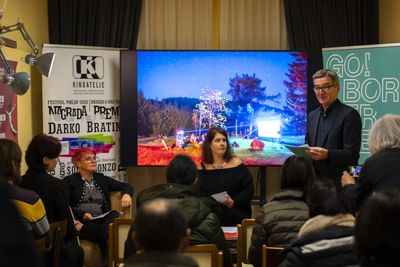
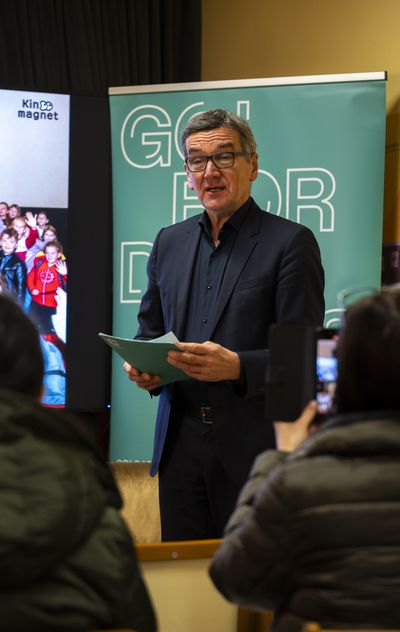
With the beginning of the year, Nova Gorica and Gorizia step onto the stage as the European Capital of Culture GO! 2025. "If there is an area where the fundamental strategic goal of the European Capital of Culture – for two cities to breathe as one – is realized to the fullest, it is precisely in the field of film and cinematography, which, ever since the application book of 2020, has carried the universally understood title Cinecittà – the film city," said Stojan Pelko, program manager of EPK GO! 2025, at the press conference at BorGO Cinema in via Rastello, Gorizia. According to him, Cinecittà has strengthened not only the capacities but also the visibility and attractiveness of the entire official program, supporting it while building and enhancing it significantly.
Part of the vibrant program mosaic of the film city is also Kinoatelje, which has set its approach through a cinematic perspective. It has designed its mission with a clear goal: to further connect film culture with the local population while simultaneously presenting itself to the European audience. Film screenings come to life within the walls of cinemas, under the stars, and on the streets. Guest appearances by filmmakers, youth education, and the preservation of heritage position film as a bond between generations and cultures.
With nearly 50 years of dedication to the seventh art, we step into 2025 with two projects as part of the official EPK GO! 2025 program. Go Cinema Hub brings together various contents, such as the Cycle of Slovenian Film in Italy, the cross-border film festival Tribute to a Vision, Kinomagnet, the traveling Kino Soča-Isonzo Cinema, the Silvan Furlan open-air cinema, the International Youth Film Camp in Nova Gorica, and the TV program Contrasts. At the same time, we focus on AV heritage with the retrospective East / West – Border Cinema, a program of Slovenian and Italian films that will travel to various European cities.
"The challenge of the content that Kinoatelje builds with numerous partners is to encourage and develop an open, challenging, and innovative cross-border audiovisual sector. It relies on a networking approach, connecting various film and cultural institutions, productions, festivals, and supports the values of intercultural dialogue. We hope that by our efforts, we will bring auteur cinema closer to the widest audience, ensuring that quality film experiences are accessible to all," emphasized the program manager of Kinoatelje, Mateja Zorn, at the press conference.
Cycle of Slovenian film in Italy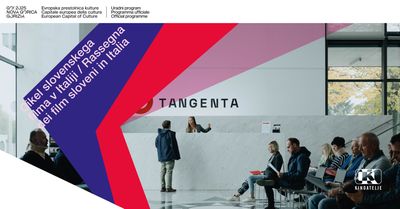
We will symbolically open the film year with the Cycle of Slovenian Film in Italy, which was once one of the key steps of Kinoatelje and its founder, Darko Bratina, in bringing Slovenian cinema closer to both professional and wider audiences in Italy. This vision was already a precursor to cross-border cooperation, which we are now fulfilling in the spirit of EPK – connecting cultures through art and dialogue. The first film evening of the new cycle, on January 9 at 8 PM at the Palazzo del Cinema in Gorizia, will feature the comedy This is a Robbery! with italian subtitels by director Gregor Andolšek. The evening of the Italian premiere will be enriched by the director and members of the film crew, who will share behind-the-scenes stories of this humorous and dynamic story, also filmed in the Vipava Valley.
The cycle will regularly bring carefully selected Slovenian works, subtitled in Italian, to cinemas in Trieste, Pordenone, Udine, and Spilimbergo. In February, we will screen Alpe-Adria Underground! (Ali je bilo kaj avantgardnega?) by Jurij Meden and Matevž Jerman, in March Cent'anni by Maja Doroteja Prelog, and in April Once Upon a Time in Soča Valley (Nekoč v Posočju) by Ema Kugler. With this program, Kinoatelje continues to preserve and deepen its vision – film as a bridge between cultures.
Cinema is our magnet!
Visual foundations are not just a reflection of the present or a window into the past, but also a magnet for new friendships. A special event – Cinema is Our Magnet! – will take place on February 14 as part of the EPK opening week, when we will take elementary school students from Nova Gorica and Gorizia on a film journey through the intertwining of Slovenian and Italian languages with Kinomagnet. Young eyes will look together toward the cultural future. The event is organized in collaboration with SNG Nova Gorica. A week earlier, students from the Nova Gorica High School will have the opportunity to watch the film The Orchestra and discuss it with director and screenwriter Matevž Luzar.
We will continue to engage younger generations through the Contrasts TV show, with the next episode airing on January 12 on the Slovenian program of the RAI regional headquarters for Friuli Venezia Giulia. In collaboration with the Academy of Arts at the University of Nova Gorica, through the Go! Studio project, we are developing masterclasses to strengthen film education and production for young people interested in film. In the first half of the year, we will host Italian director Alessandro Comodin and film theorist Alma Mileto.
Film meetings and walks 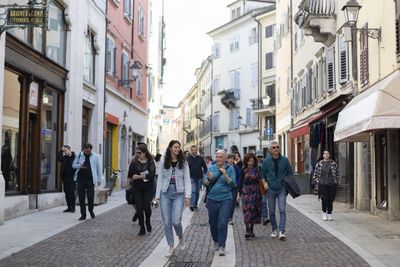
At Kinoatelje, we are creating sustainable content that will remain a part of the region's cultural pulse even after the year of symbolic culture ends. With a vision of surpassing the time frames of the project, we want the connections, events, and film dialogues created to remain alive and continue enriching the cultural landscape of both Nova Gorica and Gorizia anlongside the wider cross-border area.
With the travelling Kino Soča-Isonzo Cinema, which has been active since 2024, we are establishing open-air cinemas at picturesque locations along the border, in collaboration with key partners from the region. Even before summer, when we will gaze at moving images under the open sky, there will be events where film will find a home in multi-purpose halls in smaller towns that rarely host such screenings. On February 1, we will host the film My Border (Moja meja) by Anja Medved and Nadja Velušček in the Osek Community Center, on February 27, we will travel to Isola della Conta for a creative workshop at DobiaLab, and on March 8, we will visit the Prvačina Cultural Society, where we will honor Gorizian filmmaker Dorica Makuc.
Kinoatelje is also part of the community in Via Rastello, Gorizia, where, as part of the BorGO Cinema project, we are developing film walks. The first in the series will be dedicated to film and theater actress Nora Gregor, born on February 3, 1901 in Gorizia. We will commemorate her on her birthday with a unique event, a lecture, and a film walk.
The film year is just beginning. For more information, visit our website.
STOJAN PELKO'S SPEECH DURING THE KINOATELJE'S 2025 PROGRAM PRESENTATION
Do you know what the Italian word for “conurbation” is? Cinecittà!
Of course, not—and of course, yes. Because if there is one area where the primary strategic goal of the European Capital of Culture—to make two cities breathe as one—is fully realized, it is the domain of film and cinema, which has borne the universally understandable title Cinecittà – The Film City ever since the 2020 application book.
At that time, four projects were consolidated into a single cluster under the "Capacity Building and Support Programs" banner. Today, more than four years later, we can confidently say that Cinecittà not only strengthened capacities but also enhanced the visibility and attractiveness of the entire official program. It doesn't just support the program; it actively builds and develops it.
From this perspective—and this is something my colleague Vlado Škafar and I have experienced firsthand in recent months while finalizing the GO! 2025 program book with the Robida collective from Topolò—Cinecittà is practically the fifth pillar of the official program (alongside War and Peace, Creation of the New, Smugglers, and Very Green), or if you will, the fifth element that intertwines and moves through all four program strands.
It’s about dynamic and moving images in all their phases—from scriptwriting concepts (Script Without Borders residency) to production incentives (GO! Film Office), actual production (the Friuli Venezia Giulia omnibus short film competition), cinematographic hubs (Go Cinema Hub), festival distribution (East / West), animation (Animation Lab), documentary filmmaking (Archive Brigades and Memory Ambulance), television, pedagogy, journalism, and theoretical reflection. These are the “block” of our film city, our cinematic conurbation—and one of its key avenues or boulevards runs between the Darko Bratina Court and BorGO Cinema.
That’s why I’m proud and delighted to welcome today’s presentation of the Cinecittà segments diligently managed and developed by Kinoatelje. We are already in full swing for 2025, and the work of Kinoatelje and their neighbors from the court demonstrates just how much has already been achieved: Nicolas Philibert at the Tribute to a Vision Film Festival, Bellocchio and Tornatore at the Sergio Amidei Film Festival, The Man Who Could Not Remain Silent (awarded the Golden Palm) in the Nova Gorica Cultural Center, and Kino Soča-Isonzo Cinema at numerous locations last summer... All these are dimensions of European credibility in your work so far.
Adding to this, many Slovenian and Italian authors are still to come, including premieres; scripts written here are already being filmed (e.g., Jan Cvitkovič), and productions encouraged by the official European Capital of Culture program are traveling the world (e.g., Božič's Uncommon Fruits in Rotterdam). We can confidently say that GO! 2025 is already leaving its mark. Therefore, there’s no fear for its legacy after 2025—filmmakers, if anyone, know how to think and work in multi-year cycles, persistently striving for long-term, lasting effects.
Allow me, then, to thank Kinoatelje and the entire team for their exemplary collaboration and leadership of both projects. To all future viewers, I wish plenty of new discoveries and sublime moments, which, in their audiovisual complexity, film can sometimes still uniquely provide.