


Taranto: the Retrospective in Italy
The retrospective will continue its journey at TEFF 2025 – Taranto Eco Film Festival, showcasing how cinema transcends borders and creates a space for dialogue between cultures, history, and contemporary experiences. On Thursday, 20 November 2025, at 7 p.m., the Teatro Fusco will host a presentation of the project featuring the short film Abyssinia (Karpo Godina, Slovenia, 1997, 17’) and the documentary Trieste racconta Basaglia (Erika Rossi, Italy, 2011, 54’) in the presence of the film director.
The retrospective is part of the official programme of the European Capital of Culture GO! 2025.
Through the lens of the retrospective Oriente Vzhod / Occidente Zahod –Border in Cinema and History, Slovenian and Italian cinema will shine in full light in 2025. This cinematic journey, created in collaboration with numerous partners, evokes the rich cultural and historical heritage of the cross-border region. Through a curated selection of films – from fiction and documentaries to newsreels – it will give form to Europe’s multicultural experience.
Programme:
Abyssinia
Karpo Godina, 1999, 17’, Slovenia
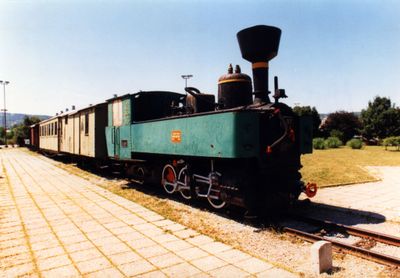
In 1900, construction began on the 123-kilometer narrow-gauge railway line from Trieste to Poreč. On December 15, 1902, the line was officially opened. People gave it three names: La Parenzana, Porečanka, and Porečka. In 1935, Italy shut down the railway and sold it off. The tracks were loaded onto a ship for wartime needs and taken to Abyssinia. Somewhere in the Mediterranean, the ship sank with all its cargo. Along the route of the former railway, only the stations remain. Some now stand in one country, some in another, while people continue to tell stories about the Porečanka.
Trieste Racconta Basaglia
Erika Rossi, 2011, 54’, Italia
The story of the challenging journey undertaken by Franco Basaglia’s team to transform the Psychiatric Hospital into a place of care, and of a path that restored identity and dignity to its people. Between Basaglia’s arrival in Trieste in 1971 and his departure in 1979 lie eight years marked by a complex and often controversial relationship between the Venetian psychiatrist and the city. Where was Trieste while the rest of the world was looking to it as a revolutionary place, a crucible of change and a new worldview championed by a courageous leader supported by an army of young people?